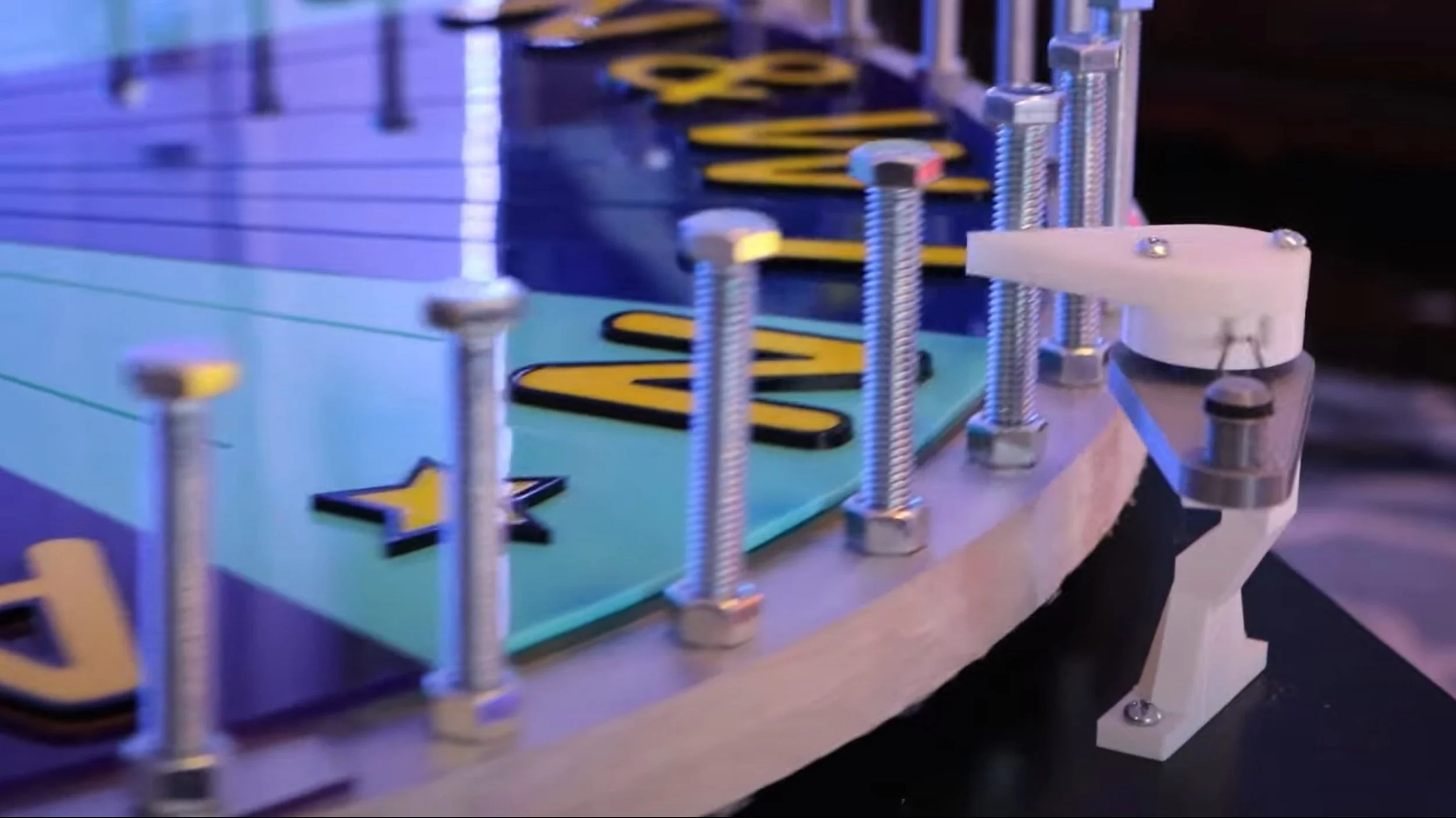
As someone with a lifelong passion for game shows, I have always wanted to make a Wheel of Fortune replica. The opportunity finally arose as I was wrapping up my Bachelor’s at SDSU and took the Tangible Interactivity in Art and Design course, and later expanded into building other components of the set and creating functional gameplay software to host immersive game night experiences for friends.
Wheel of Fortune Replica
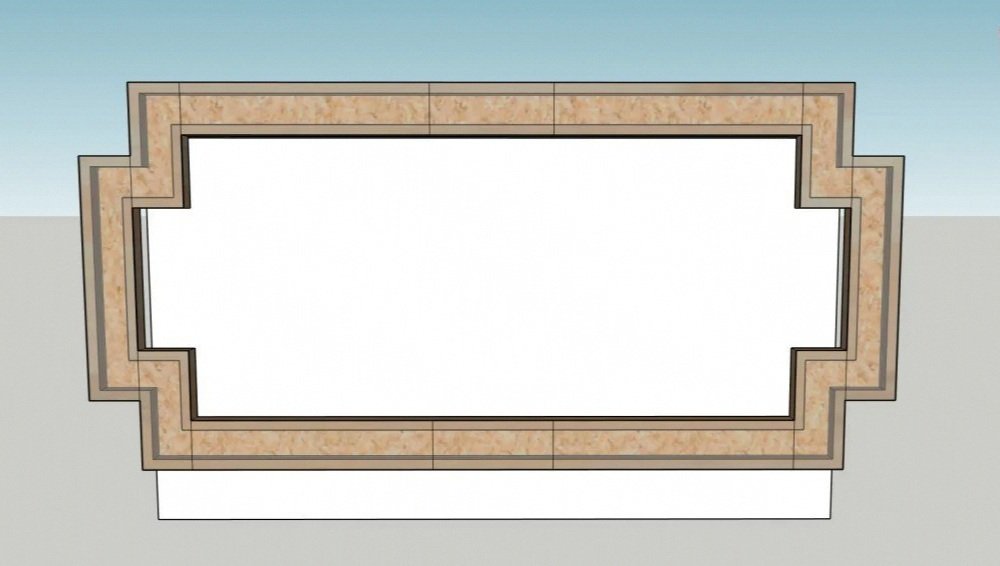
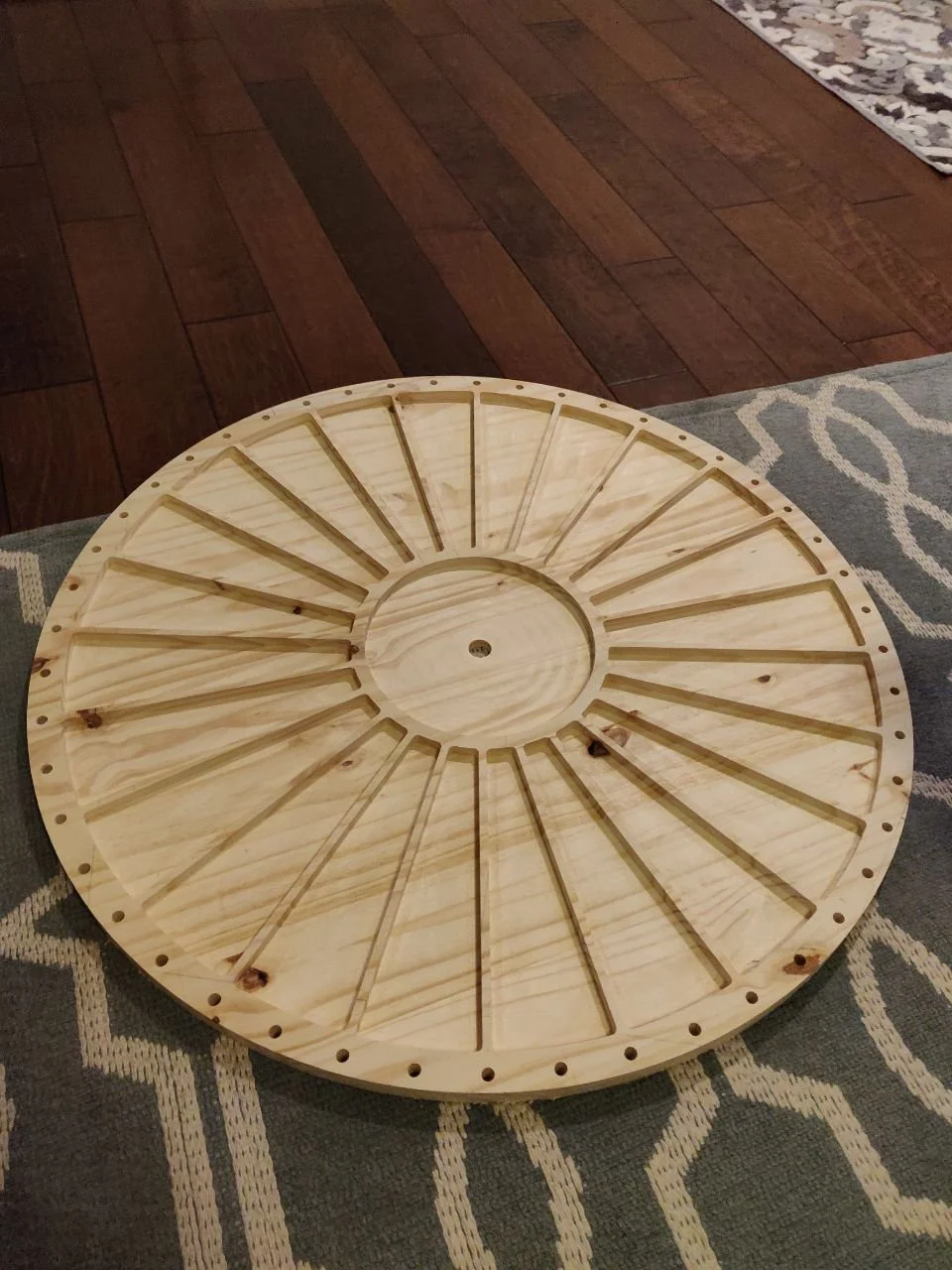
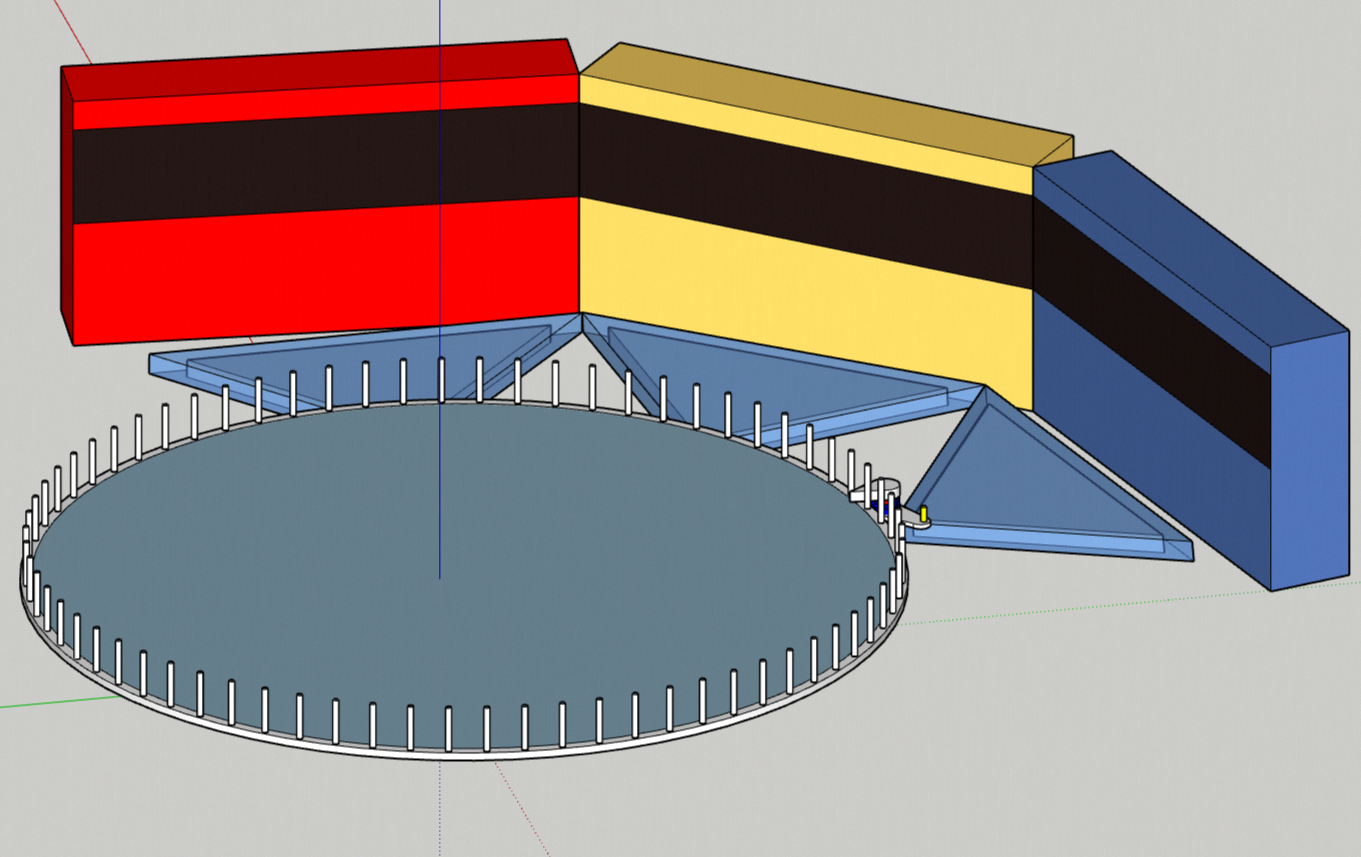
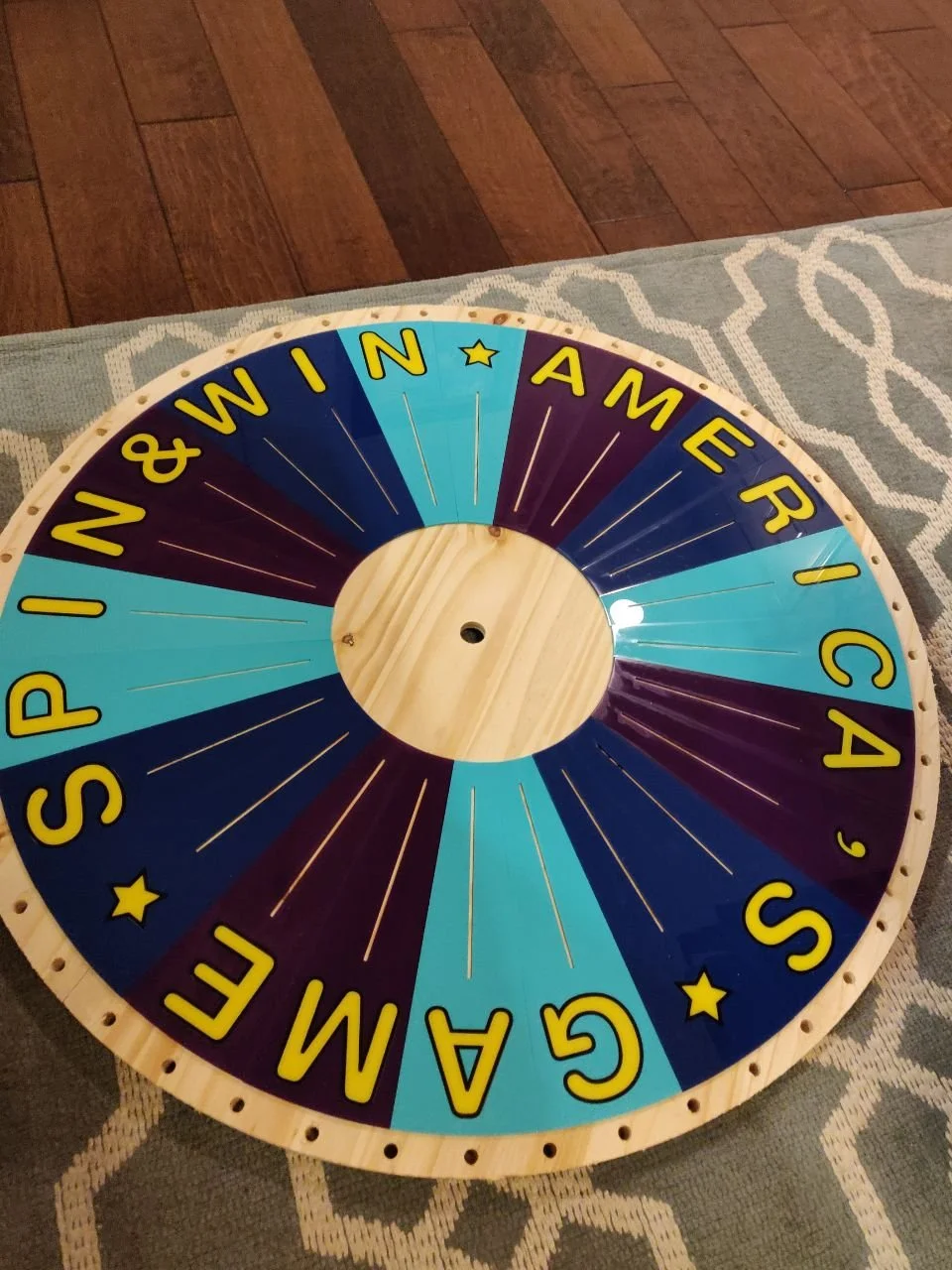
Early design for the project took place first in Adobe Illustrator, where designs for the vinyl plotter and laser cutter were made. Autodesk Fusion 360 was used to complete the design of the 3D printed “flipper” components, Rhinoceros to finalize CNC designs for the main and bonus wheels, and SketchUp to visualize and plan the puzzleboard TV frame as well as explore options for the player podiums.
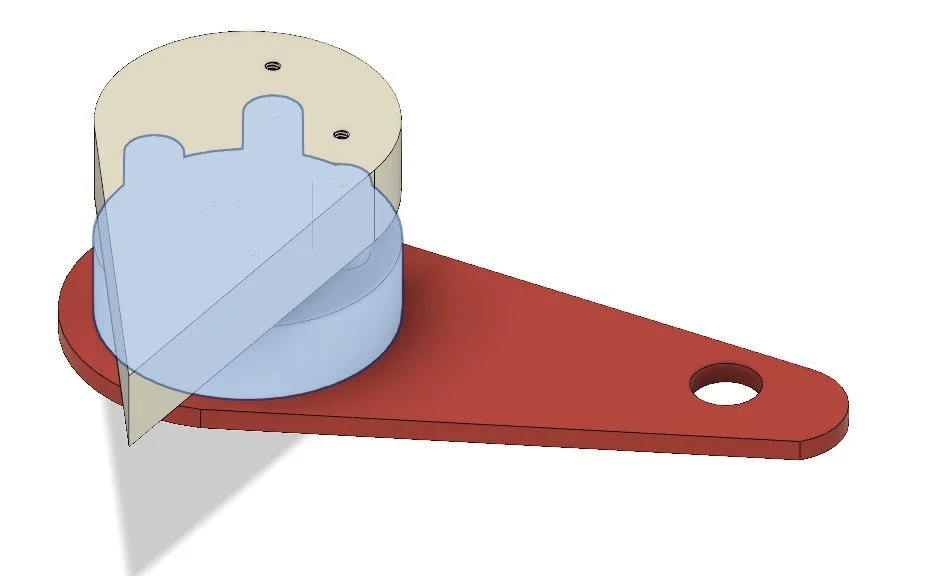
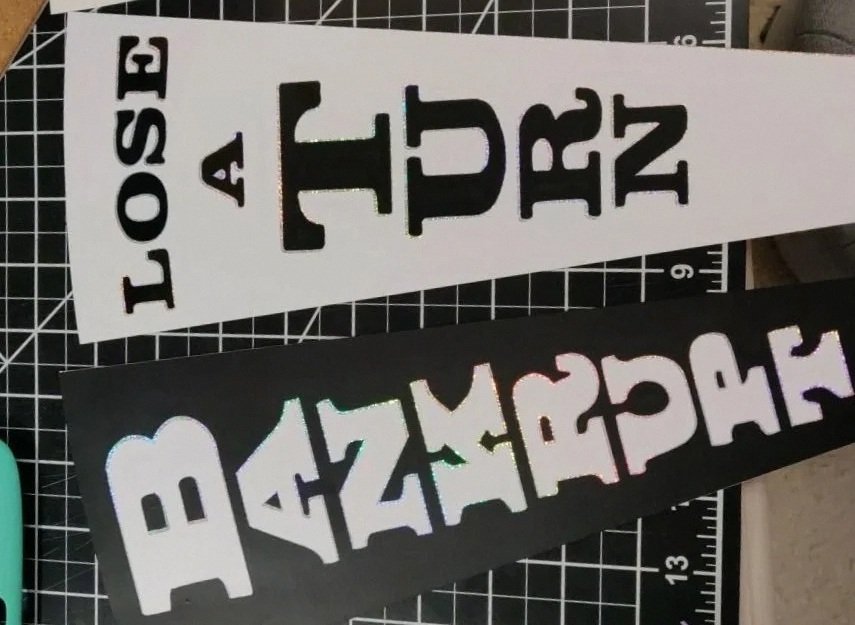
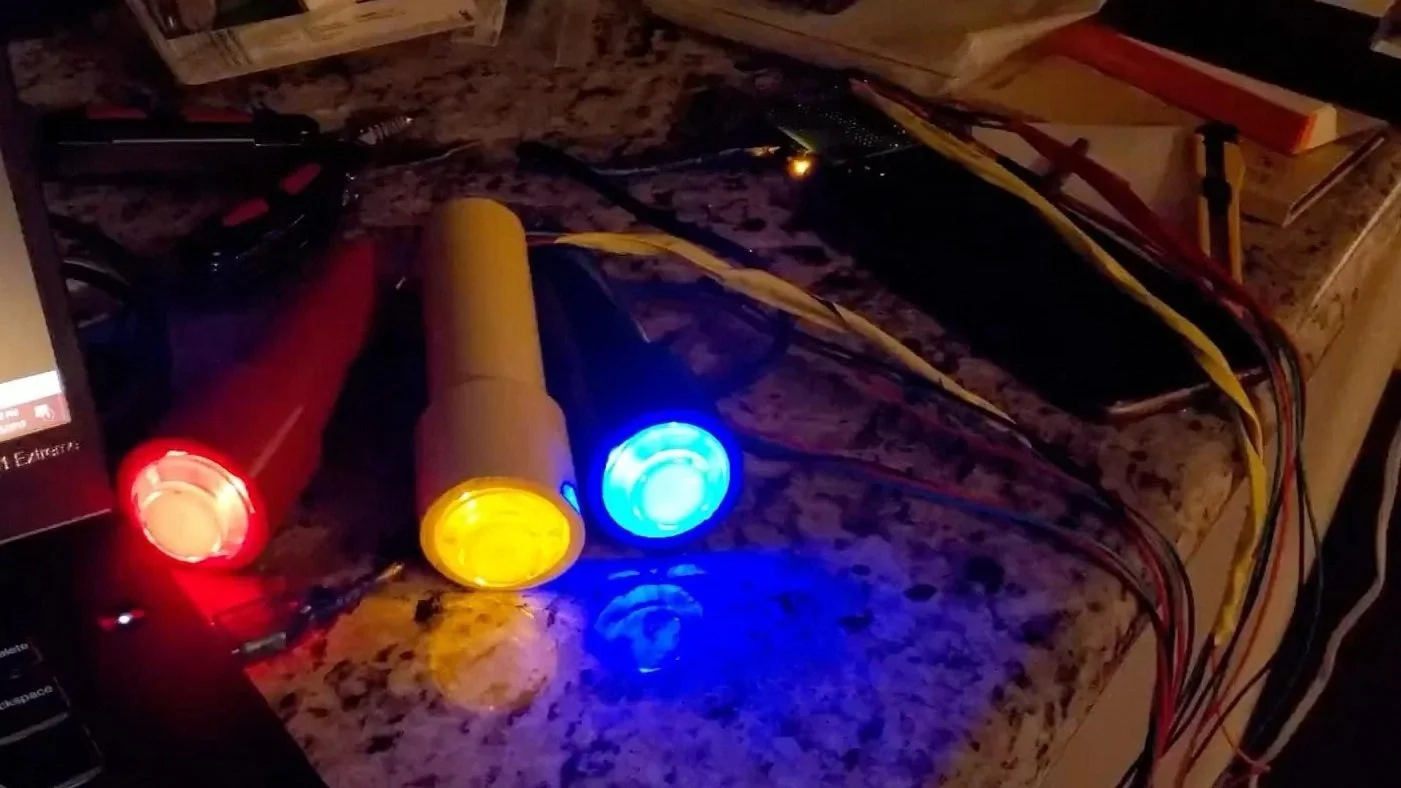
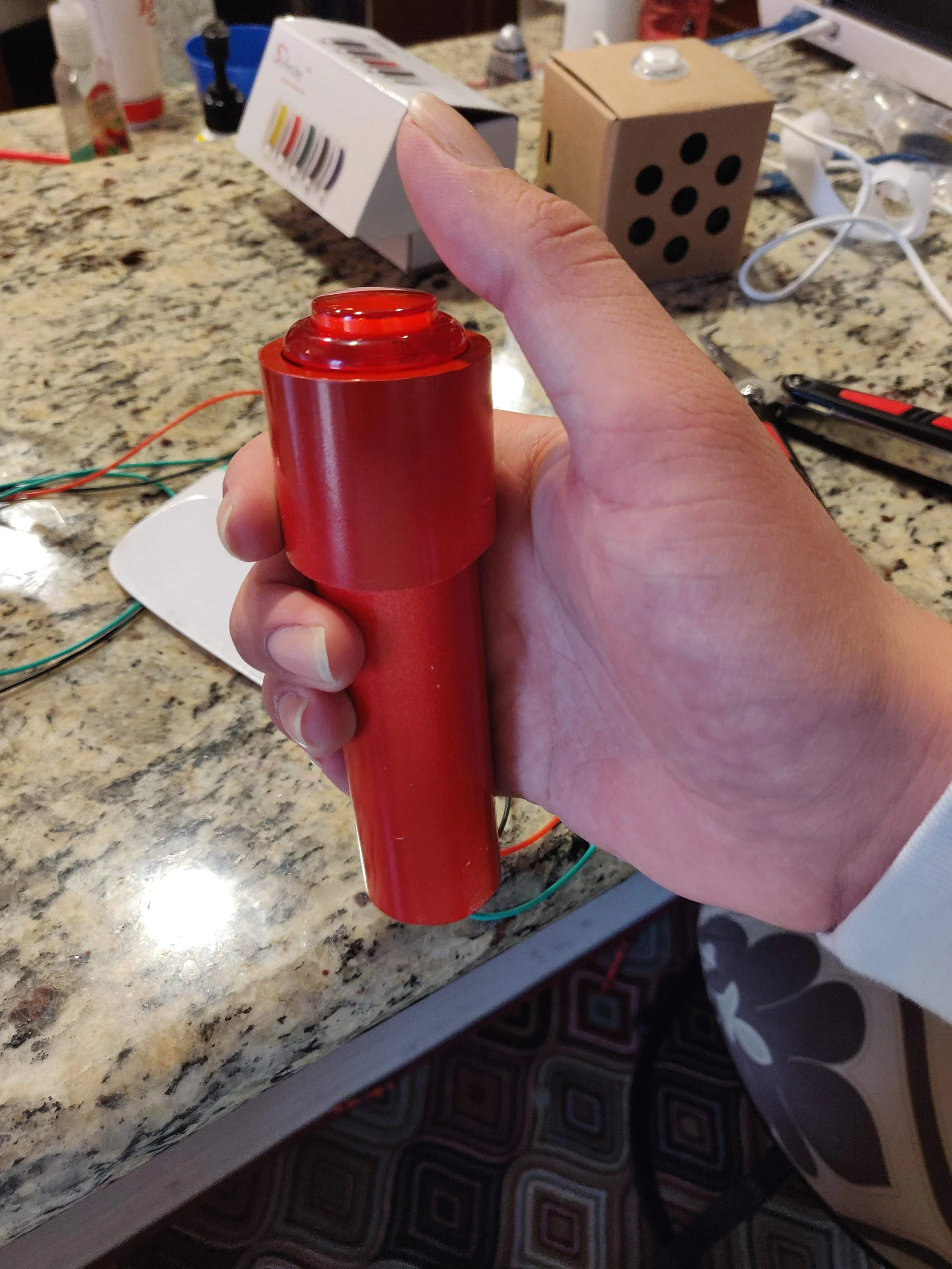
Fabrication took place almost entirely on campus, making use of their laser cutter to cut acrylic for the bonus wheel, puzzleboard, and podiums; the CNC router was used to cut the bonus wheel out of plywood and the main wheel plus its base out of MDF. A consumer vinyl plotter was used to make the wedges and some rudimentary work led to the PVC-based signaling devices and the pegs on the wheel which were steel rods simply cut and filed.
The signaling devices were spray painted in their primary colors with the wheels and puzzleboard receiving coats of a metallic silver.
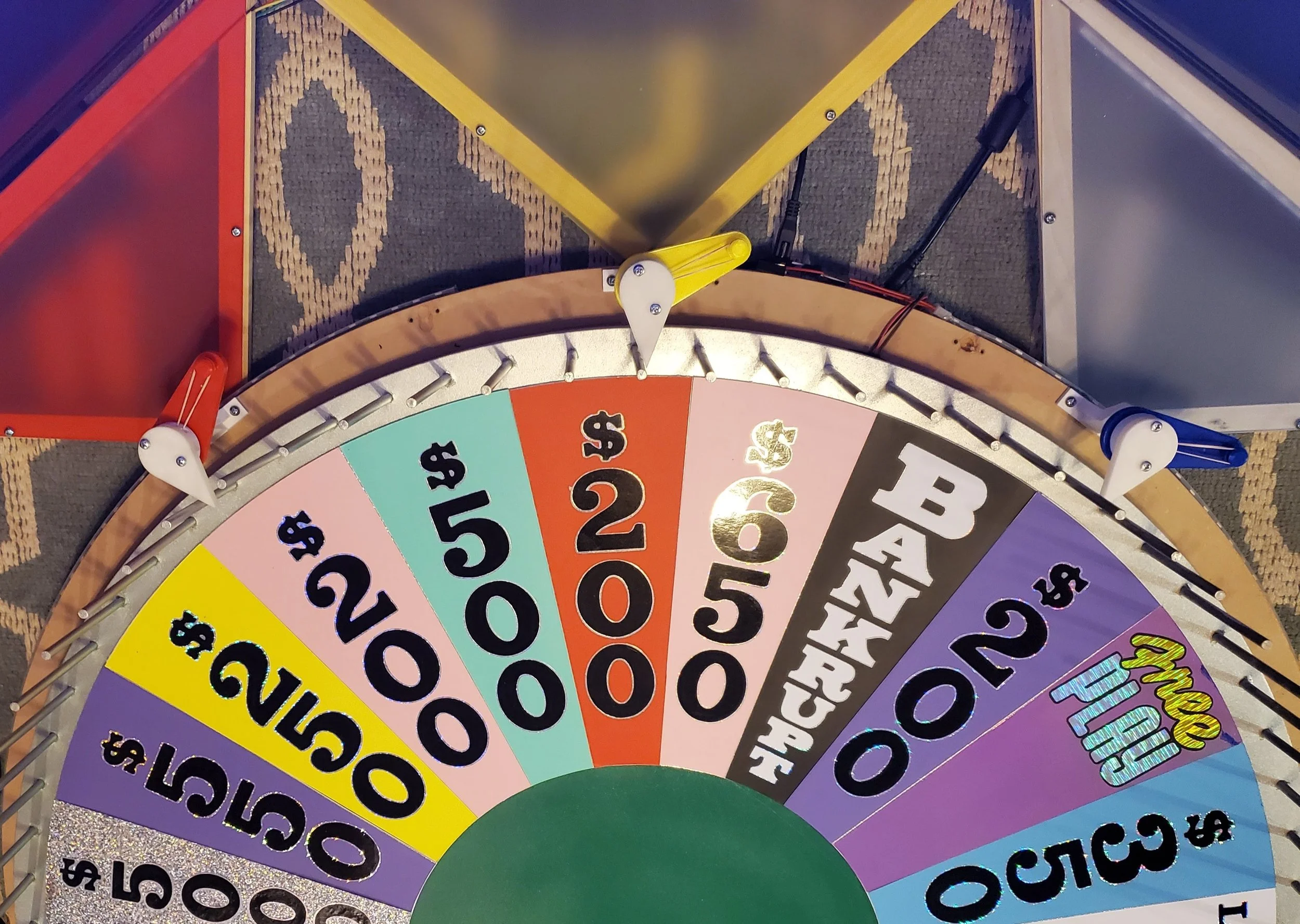
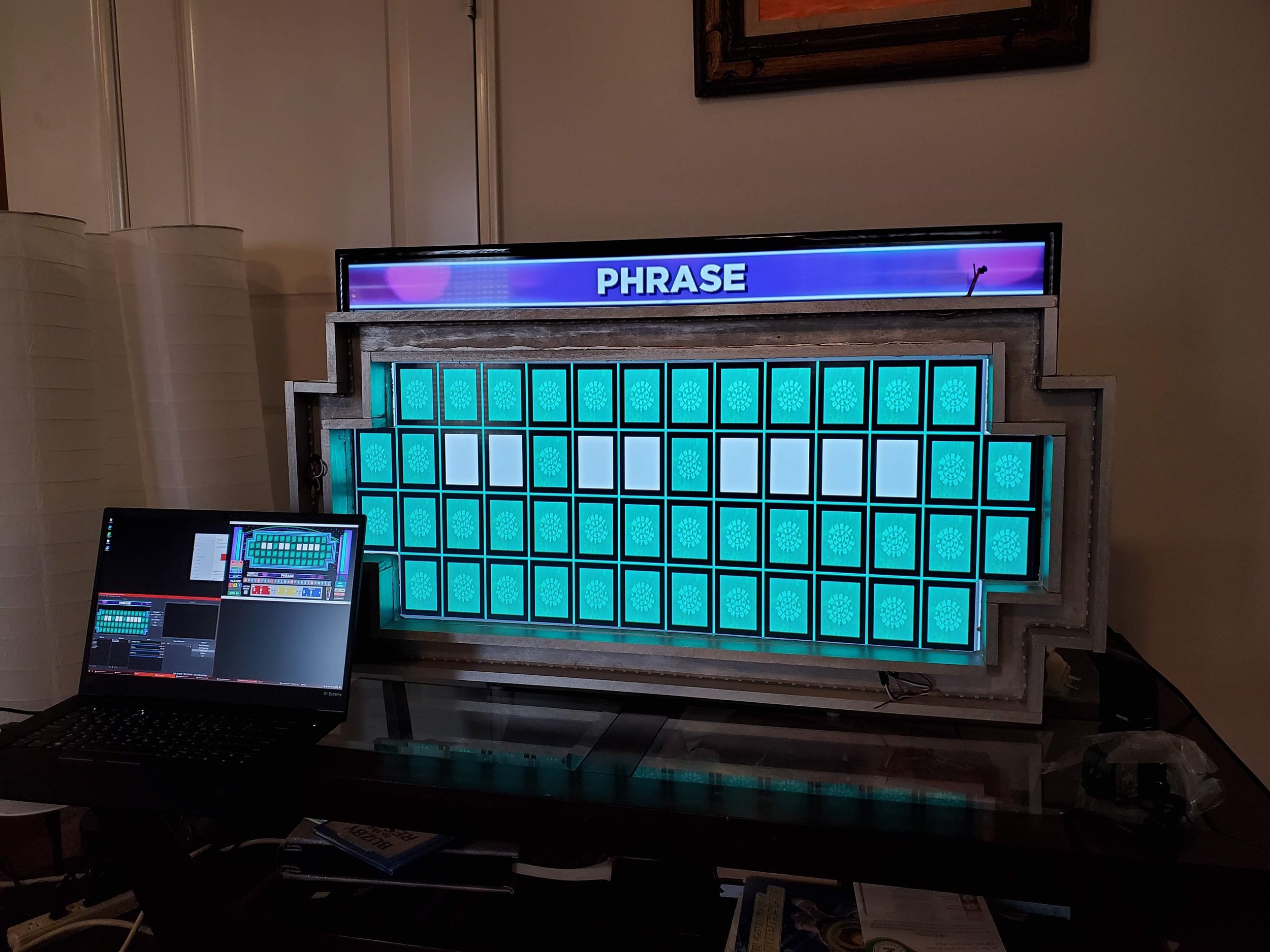
Tying everything together was the electronics: Lighting, game software, and peripherals powered by Arduino microcontrollers and Python, everything commanded by a single laptop. Lighting is dynamic and responds to game conditions for a truly immersive experience. A couple of these short video clips also include motion graphics made for this project with After Effects and its deprecated ray-traced 3D renderer.